Lit Lab Magazine
In addition to The Triangle, I write opinion articles for Lit Lab, a STEM Humanities-focused magazine at Drexel. I mainly focus on student interests in AI usage, co-op experiences, and STEM research opportunities
Featured Articles:
Join Hackathons for the Skills, Not Just the Algorithms
January 12, 2026
Hackathons are a great way of merging technological concepts with societal concepts, making new products, and immersing coders in new experiences.

These technology-driven competitions can be competitive, innovative, and intense, driving coders and programmers to push themselves to use their critical thinking and intuition to create a product to please a set of judges in a matter of hours or days. However, themes can often be repetitive, especially with AI implementation, so it’s important to constantly utilize different technical skillsets, as coders are encouraged to come up with better product ideas than they are used to making or designing.
Several students shared past hackathon experiences they’ve had, to test the limits of their technical, creative, and problem-solving skills.
A group of Drexel students who formed a hackathon team for a technology expo sat down with me to share their development of a project idea based on a specific niche theme.
“The one that we did last year was more community service-based. We went to focus on making like an app that would help the community around us. So, the topic, in essence, was how can we use AI to make tasks that seem mundane more efficient and more desirable. So, our idea was based around helping people make donations more efficient through the use of AI,” one of the members said.
“What are some tips new coders could use when they’re competing in a hackathon for the first time?” I added.
“I feel like a lot of people who are new to hackathons get scared because they don’t know a lot of things before they come to the hackathon. That was definitely me last year as well for my first hackathon, but I would say a Hackathon is all about coming across things that you don’t know and then finding out how to do those, or how to fix those, or how to fix those problems. So always come to a hackathon with the idea of knowing that you will run into things that you don’t know and that you will need to find out how to navigate those on the go,” the member added.
“What would you like hackathons to challenge you more with?” I replied.
A third team member replied, “I do wish [hackathons] would get out of this ‘let’s have every hackathon be AI-based’ because I feel like at a certain point you run out of different use cases, and everything kind of blends together. With the limits of AI currently, once you have enough hackathons that say, ‘let’s use AI,’ you start reaching that ‘ok, we’ve done more things
with AI than AI can do right now,’ and it starts to get a bit stale. I wish hackathons would branch out from that because there are other interesting technologies and other interesting solutions to problems that don’t involve AI or machine learning.”
Another group of Drexel students who formed a hackathon team discussed with me how hackathons allow students to showcase expertise from other majors, but have also noticed a growing demand for AI-related skills.
“I have a concentration in AI, ML, and software engineering. And from [my] co-op experience, I’ve done a lot of cloud engineering, so that’s one way I think I will be contributing. Also, I have taken courses here at Drexel, which taught us how [a] machine learning model is made, and how we can use AI, how we can train models so that information, that’s those skills, will also be helpful,” one of the students said.
“How do your individual specialties contribute to your project?” I replied.
“In terms of our project, of course, it’s AI. So, we would be working with ML models, and recently I’ve been doing my senior research, and it’s in cosmology, but I’m building a whole neural network for that to kind of like predict the parameters of galaxies from dummy data on real data. So based on all that I’ve learned about ML models there, I can apply it here to make a project,” said another student.
“What makes you want to learn even more skills to compete in these hackathons?” I added.
“I think right now there’s too much focus on AI, so what ends up happening is there are a lot of competitions that have happened just based on AI. I would rather there be more different topics than just AI. The thing is with Hackathons, is that we come here, and we gain a lot of experience with things that we haven’t learned before, and I want to learn new things rather than just keeping in touch with AI’s development.”
Hackathons are open-ended opportunities for Drexel STEM students to use and develop their technical and critical-thinking skills. With the rise of AI, the recommended skill sets for these contests are becoming narrower in scope.
By knowing what to look for in the right teammates with the right ideas, students can apply their knowledge to apply untapped concepts into projects that could truly surprise others. Hearing these group experiences truly makes me wonder how much we can learn if we are motivated by others to rise to the occasion and try something new.
STAR, A Golden Opportunity to Unlock
Jan. 18, 2025
After arriving at Drexel, first-year students have a wide range of options in front of them to make their college experiences worthwhile. If students seek to take a hands-on approach to their education while being creative, they should explore the potential of being a student researcher by applying to become a STAR (Students Tackling Advanced Research) Scholar.
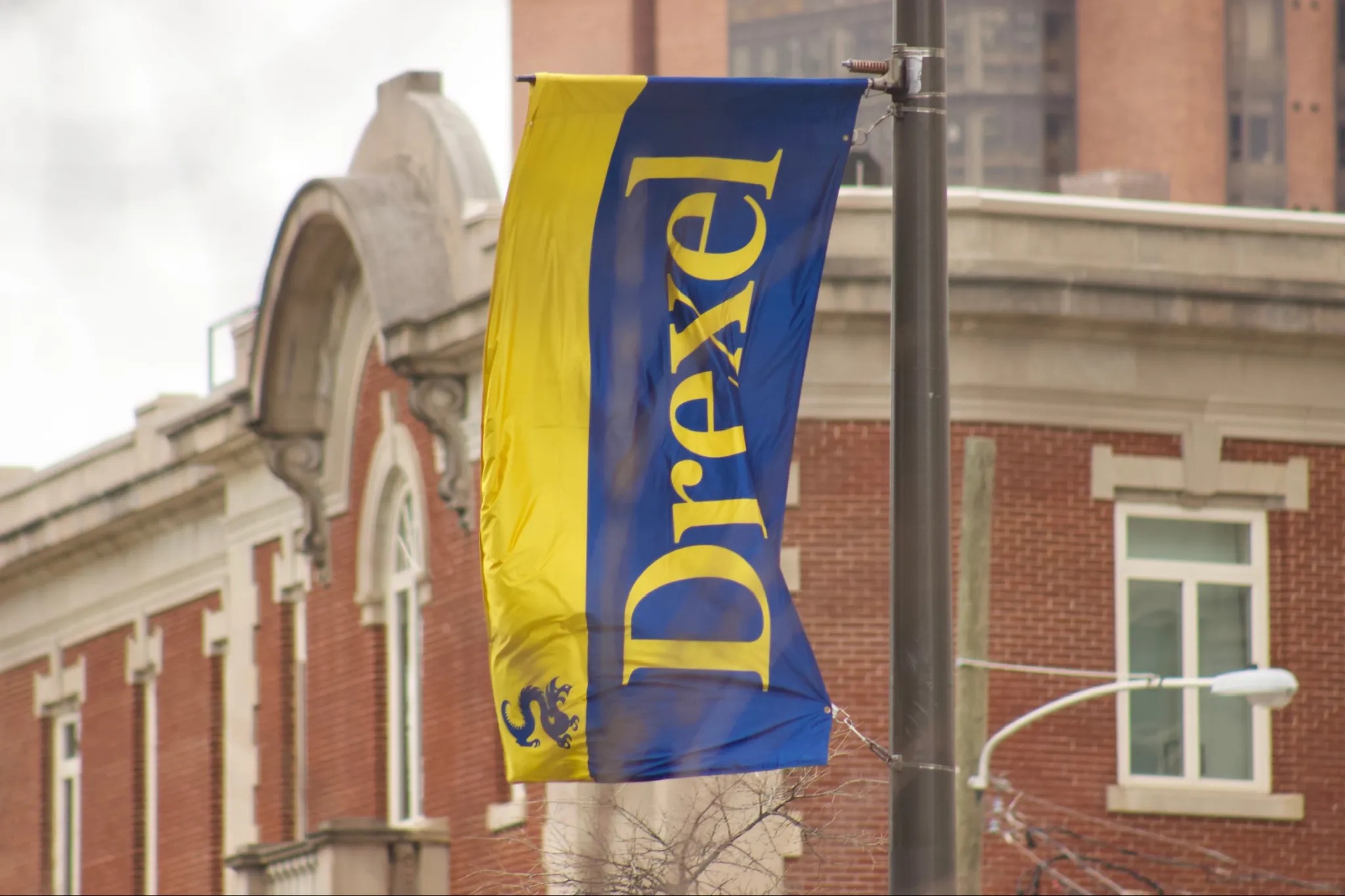
STAR is a great way for first-year students upon completion of their freshman year to learn new skills for their major at the hands of well-known Drexel professors, have great research opportunities, and have immersive experiences in finding, researching, and presenting topics in their studies.
Several STAR scholar alums shared their stories about why they chose STAR and all the great experiences they received through the program.
A second-year Biomedical Engineering student and I discussed how STAR boosted her potential for growing in her major’s field.
“How has STAR impacted your way of thinking as a potential researcher in the field you want to go into?” I asked.
“I’ve definitely learned a lot of new skills, both inside and outside of the lab. I’ve been able to get better at lab skills that are essential for my research, such as dissecting fly brains. I’ve also gotten a lot more experience with presenting my research to different types of audiences. It’s important to be able to convey what I’m investigating to both an average person or an expert in my field.”
“How do you plan to apply the skills you learned in this program to future courses or co-op opportunities?” I replied.
“I’ll be able to apply the skills I’ve gained by writing my research abstract as well as presenting my research in different ways to my future professional goals. In any profession, effective communication is essential, and that’s something a program like STAR forces you to develop.”
“What advice could you give students thinking about wanting to apply to STAR?” I added.
“Reach out to those around you – whether you have a professor whose research you’re interested or know a student that works in a lab, always reach out and ask questions. In my personal experience, faculty at Drexel are very willing to mentor students that are excited to learn. Resources like UREP also make research opportunities incredibly accessible to Drexel students.”
Besides the fact that participating in STAR research can give you great professional opportunities, it can also provide great learning experiences not just at Drexel but also the privilege to do research at universities and institutions in other countries.
A second-year Mechanical Engineering major shared with me how his STAR study required him and his fellow scholar to briefly move to a different university to complete his research.
“Which university did you travel to?” I asked.
“I went to Chennai, as part of the Indian Institute of Technology Madras and spent 10 weeks in the residence halls.”
“Despite the culture shock how were you supported in your research being in that new environment?” I replied.
“The academic atmosphere there is incredible, the PhD scholars we worked with opened our eyes to the possibilities we can explore [within] ourselves!”
“Did you gain double the experience by going abroad for this project?” I added.
“For sure, I feel like apart from developing the research acumen and academic acumen that comes with STAR, we also developed as people through all the lived experiences we had, being in a different environment, immersed in a different culture, and as a result, I had a whole year’s of experience within two months.”
It’s not just the satisfaction of learning new skills and having new experiences that come with STAR, but also the personal satisfaction of researching a topic a STAR scholar could be passionate about.
A second-year data science student shared with me how her interest in exploring the inner workings behind TikTok correlated with the project she took on of exploring harassment on the app.
“What gave you the idea to explore this topic?” I asked.
“I’ve already been interested in TikTok in the past. I actually did a paper on it for my communications class. I talked about why it’s the best platform for businesses to use, and the biggest thing was that it has such an interesting algorithm [which] pushes videos to people in a great way, and if you have a business, you can very easily push a video onto people. After being interested in TikTok because of that, I decided to look into harassment on it.
“What is the most important thing you learned from this project?” I replied.
“I would say, I learned not to be so scared of trial and error. When I was doing different things for this project or making [my] poster, I didn’t expect to have so much trial and error, [and] I thought that after one look over, I’ll be done, but we kept working and working, on this poster on different things, and making it even better.”
“Does this relate to your professional goals in any way?” I added.
“Yes, I wanted to know research is something I want to do in the future, and I did really like this experience, so I definitely want to do more.”
Research opportunities can bring a wide variety of experiences to students, but for the STAR program, it can really help first-year students get a leg up on skills they can apply for their co-op, subjects they could explore, and introduce new places where research can be conducted besides the Drexel campus.
If students feel conflicted about applying for STAR, they should think twice about being hesitant. They could miss out on the chance to be more hands-on and expansive with their education beyond the classroom. You can never know when skills learned from a research program can come in handy for any opportunity that comes their way.
Without Boundaries, AI Makes Us Complacent
Jun. 18, 2024
AI nowadays has a significant presence in student academics, but the students who use it might not know how to be over-reliant on it.
Chatbots and AI models have improved a lot over the past two years. Students have developed a natural reflex to use AI in case they can’t solve a homework question, need a second opinion on a text, or even come up with an idea for a project. With all these applications, I began to think while we are instilled rules of how much we can use AI, we have not yet been taught to create a balance between coming up with a solution versus using AI to generate a solution. I had several conversations with computer science majors from different backgrounds to see just how much of an influence AI has in their studies.
One was a first-year software engineering major. With student speculation on how AI is flawed, she and I touched on the limitations of trusting AI with an external source of judgment.
“Let’s say I am working on one project [and] reviewing someone’s code. Sometimes I don’t know what something means, so I put it into ChatGPT and ask, ‘What does this variable mean,’ or ‘What is this function doing?’”
“Do you not always trust it, hence how you only use it once a week?” I asked.
“Yeah, I think it’s not 100% reliable sometimes.”
“How so?” I replied.
“It might make up things that maybe aren’t any code, or for things that are missing it doesn’t fill in the blanks, so I don’t think it’s completely reliable, and you kind of have to do your own research before you ask.”
Every student should have this mindset of trusting AI to provide them with quick or concise ideas and answers. Media representation has painted AI as this all-knowing source of accurate knowledge hence why people like to use it. However, technology companies update their AI models and platforms each year, people should be more aware that AI hasn’t yet been confirmed foolproof in terms of making mistakes.
When using AI as a learning tool, I asked a second-year computer science major and finance minor for his insight on why AI should only be used in obtaining simplified facts to help us come up with small solutions for academic questions or problems.
“I think getting access to high-quality resources, is one of the AI’s main tasks which I am actively taking advantage of. Let’s say I am struggling in any subject or coding lesson, I can easily ask them, ‘Hey how can I learn this’ or ‘How can I do this’ for a decent explanation. We can do that in Google, for sure, we could have got the same answers, but AI basically saves us tons of time, [a lot] of effort, and gives us compressed information at the same time.
“In terms of that, what makes AI help better than a human perspective?” I added.
“It’s free, easy, accessible, and works 24/7, but I would say you aren’t gonna get decent face-to-face experience than you get from a professor or tutor. In general, [there could be a] good balance, if you can afford a tutor, of course, get a tutor, but if you cannot afford it, then you can go for AI, but one thing I want to mention is that no matter how smart the tutor is, AI always exceeds them, and AI knows more information than any professor.”
Given that AI is both helpful and distrustful simultaneously, like two sides of a coin, I believe there is room for students to have a healthy usage of AI by setting boundaries and accepting its knowledge limitations.
Another second-year computer science major I talked to addressed how he thinks AI can damage our thinking processes if we overuse it.
“In terms of academics, I use AI mostly for explaining and breaking down complex topics. Usually when anything can be easily explained, or I can’t understand it. I found myself using it a little too much, and I don’t want to become complacent, because when you overuse it, you start to not really digest the material you are learning, and it can lead you to not really understanding the concepts. As long as you use it in a way that promotes learning for yourself, I think it’s acceptable.”
“Do you think students should set boundaries for themselves when using AI?” I asked.
“If you tend to use it [you can] kind of turn your brain off. It’s like building a bad habit, you’re training your brain not to think, and you’re training your brain to rely on AI. You want to use it as a resource and not the end to a means, just something for you to build onto.”
“What could students better do to trust AI in the future as it evolves?” I added.
“I definitely feel like AI could pull from actual resources or actual links because currently it’s known for making stuff up or pulling false information. Adding filters and quality checks to AI results would improve the quality and trustworthiness in the first place.”
These are all ideas we should always have in the back of our minds as we continue to use AI to assist us in any academic matter. It’s on us to control how much we allow AI to influence our answering and thinking processes as we complete assignments and draw up project ideas. All my conversations have led me to conclude that until AI is better proven to be foolproof and better coded, we should set boundaries in how much we can use AI to help us solve academic problems.
The Unexplored Co-Op Challenges of a Computer Science Major
Jun. 18, 2024
The Drexel University co-op process isn’t easy for any major. But for computer science majors, there should be more awareness for the first and second-year students preparing to apply for their first co-op about the extra steps required to search and apply for a position before obtaining it.

Many CS students currently on co-ops or working part-time jobs after completing their co-op, discussed with me a challenging aspect of their co-op interviewing process they didn’t perceive as they targeted the positions within their reach and skillset.
A third-year CS major on a four-year track who now has a software engineering position at the company she did her only co-op at, mentioned additional tests and preparation methods she took to ensure the employer would hire her.
“It was very stressful, I had to do a lot of preparation, practice coding problems and a lot of practice interviewing myself between my friends and I to see where I can improve.”
“Was there anything in the job description or interview questions that tripped you up as the employer talked?” I added.
“Most of the time in the interview, I would ask what they were looking for out of the person they were hiring. They didn’t want too much knowledge or expertise and were ready to hire. However, it kind of contradicted the coding exams that were given along with online assessments before the interview was actually taking place.”
Drexel’s programs may or may not go into depth on how to help students prepare for tests like those to get the position they want. What makes it more stressful is that students might need to balance finals or exams aside from preparing for an exam to get a co-op position.
There is also the concept of having two rounds of interviews. If an employer likes a student in an initial interview they might call back for a second round to learn more about them as a rising professional, which students might not perceive as they are searching for positions to apply for.
A second-year CS major currently in a junior software engineer co-op position shared his story about how he landed his position after two interviews with his current employer.
“I had two interviews. My first interview was casual and my second interview was a little more technical based. They asked me conceptual questions about Javascript and functions. Both were virtual.”
“How competitive was it to get your co-op position?” I asked him.
“It was pretty competitive. It was only one of the two interviews I got and my friend also got the same interview for the position I am at right now.
“What made you stand out the most?” I added.
“I had experience of what they were using on the job and understood most of their questions.”
What’s on the rise nowadays when it comes to searching for co-ops is the immense amount of hiring freezes co-op employers face making co-op searching limited for first-time co-op students.
A just-graduated Drexel software engineering major shared his stories of how he witnessed the co-op job market shift during all three of his co-op experiences and how there isn’t much awareness being spread among the students regarding new qualifications required to break into the tech industry.
“When you look at the many positions online, they require some level of initial experience, 1-3 years. However, there are a lot of professionals that got laid off for various reasons. The first reason is because of the pandemic. Over the course of the pandemic, the companies hired remote workers to scale up their firms because many of these firms were digital firms and they needed to scale up quickly because that was the nature of the pandemic. After people started returning to the office, the demand subsided and as a result, they had to lay off the workforce. So now you have a lot of remote workers floating around the economy who have 1-3 years of experience already.”
“How does that contribute to the co-op hiring process, regarding these changes over the last few years?” I added.
“Because you can hire young professionals now, the demand for co-ops is less. The second thing I would probably say why it’s difficult to get a co-op and even a full-time job nowadays is because the skill sets given are changing rapidly. Many of the things we currently do right now are already on the cloud. However, we’ll start to see an emergence of technologies such as AI and machine learning and not necessarily the development of it but the application of it.”
“What advice could you give younger students to gain the trust of a future or current employer to secure a spot in these companies where they could grow these required skills?” I asked.
“It depends on a lot of things. The first thing is it depends on your team dynamics if you’ve worked well with your team. I would much prefer someone who I know that has slightly subpar talent, but I can work well with them as opposed to someone with great talent but has terrible people skills. A second thing is whether they are able to adjust rapidly to the changing job conditions right now. If they are not able to do this then they are probably not able to maintain their position or any other position going forward.”
It’s a big struggle if you are a working professional struggling to keep up in a changing job market. As a computer science college student trying to break into the job market, it seems twice as hard because they are learning new skills, doing projects, and preparing for job interviews. These students have shown me, that we must find smarter ways to adjust how we prepare to take on internships and co-ops as much as the job market finds ways to make breaking into the technology industry more unpredictable and competitive.